Antarctic Trip January 1998
'The warm glow of the sun with the keen invigorating cold of the air forms a combination which is inexpressibly health-giving and satisfying to me, whilst the golden light on this wonderful scene of mountain and ice satisfies every claim of scenic magnificence. No words of mine can convey the impressiveness of the wonderful panorama displayed to our eyes.'So wrote Robert Falcon Scott on 4th January 1911, and I read these words on board the M/S Disko heading across the Drake passage toward the same continent that Scott was describing---Antarctica. It was on the 4th of January 1998 that Amanda and I set off from Heathrow toward the land of ice and snow.
The journey to the other side of the planet was hot and tedious, and I
won't dwell on it over much, but we were heading to Buenos Aires via Miami,
with a 7 hour stop over in between. Even so, we went on a walking tour when
we arrived in the city---after all, it was included in the package, and it
was still only the middle of the afternoon.

Buenos Aires
We stayed overnight in an hotel,
but were flying south again in the morning, like migratory birds flocking
to their winter nesting sites. Next stop was Ushuaia, in Tierra Del Fuego,
the large island which is the southern tip of South America. This Argentinean
'City' only has a population of 50,000 souls, most of which are paid to be
there by their government. The city stands on the Beagle Channel, named after
the famous ship which carried Charles Darwin around the world, and the
airport's runway stands off-shore in this channel. As the aircraft have to
fly over the Andes to get to the airport, the descent becomes very interesting
as we spiralled down into the channel, and then land on what looks like the
water itself when sitting in the passenger cabin. The view of the mountains is
spectacular as one comes in, knowing that the range extends all the way up the
continent. We stayed overnight here, in a pretty Swiss style hotel up in the
mountains above the city.

The Beagle Channel
In the morning our ship was due in to port at 7 a.m., and we both got up to
see arrive. It was a lovely morning, with the sun streaming through the clouds
over the channel, and the ship sailing up the channel right on time. It looked
very small, even in the relatively enclosed Beagle channel. We weren't to join
the ship until late afternoon, and in the morning we had a tour organised to
the Parc Tierra Del Fuego.
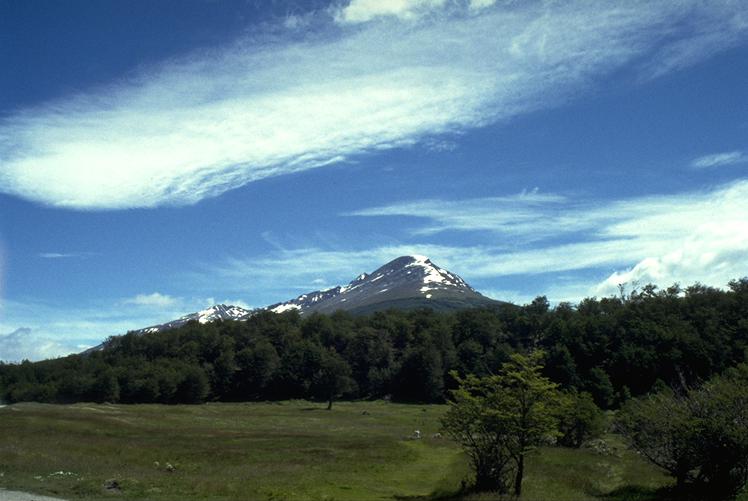
Mount Condor, Tierra Del Fuego
We saw some lovely scenery and wild life with our Argentinean guide, and the mountains still had their ubiquitous presence. It was already cold here, despite being just passed mid summer and the sun shining bright. Apparently native Indian people lived in this area before the Europeans came, and all they wore was seal fat, even in winter.
We joined the ship a little late in the afternoon. This was most exciting. The
ship was a Danish registered vessel, with Canadian, Russian and (I think)
Eskimo crew. It was a converted research vessel which could carry 80
passengers and about 20 or so crew. We later found out that it had spent its
life in Arctic waters, and this was its first season South.

M/S Disko at Ushuaia
Our fellow passengers were mostly American which we had joined in Buenos Aires, but we also joined a large group of Australians on board ship. The Aussies proved to be great fun and we also met a young Israeli couple who had being touring South America for six months on their honeymoon, and had decided to go further south when they arrived in Ushuaia. We spent a lot of time with them on the voyage, and it turned out that the young woman (Marianne) was a digital electronics designer like myself.
That evening, as we sat down to dinner, the ship weighed anchor and set off
down the Beagle channel, heading for the Drake Passage, the most stormy Ocean
in the world. After dinner we all went up on deck to look at the channel. The
water was calm and only a slight breeze chilled the air. We retired to our
cabin late that evening---the nights being short even at this latitude. Our
cabin was small, but had a private toilet and shower cubicle. We had no port
hole as did the more expensive cabins, but this became a blessing when we were
further south where it never really got dark and kept some people awake. That
night the ship noises were strange, and we woke up in the night with stuff
being thrown about the cabin as the ship tossed and turned---we'd packed our
own stuff away, but the wall mounted bin in our cabin had freed itself from
its mountings at one point, with a mighty crash. Still, we managed to get some
sleep, and awoke the next morning with the ship still rocking quite heavily.
Whilst lying in our bunks, we didn't seem to mind the motion too much. It
wasn't pleasant, but it was tolerable. So I decided to get up and have a
shower, which I did, holding on tight. However, when I got out I started to
feel not quite so good, and it was then that I was glad we had private toilet
facilities. Lying down again made things better, so we skipped breakfast and
stayed where we were, think of ourselves as land-lubbers. Later, one of the
crew knocked on the door, and had come with the young Argentinean Doctor that
was on board. We were advised to get up top and get some fresh air, and to eat
something. Amanda asked if many others weren't feeling so good, and we were
told that no-one had got up for breakfast. Still, we got up and went to the
first of a series of lectures by the on-board naturalists who would be our
guides in Antarctica. The rest of the journey was similarly rocky, but Amanda
and I were not physically sick again, though one doesn't feel quite well for
the duration. Some people never left their cabin for the entire crossing,
which was a pity as there were many things to see in the two and a half day
journey.

In The Drake Passage
We saw many sea birds whilst at sea; they follow ships to pick up krill and
small fish churned up by the propellers. Some gulls, petrels and, of course,
albatross. Some smaller, pretty, albatross we saw, but the huge Wandering
Albatross is truly a magnificent sight as it effortlessly glides above the big
waves, almost touching the water.
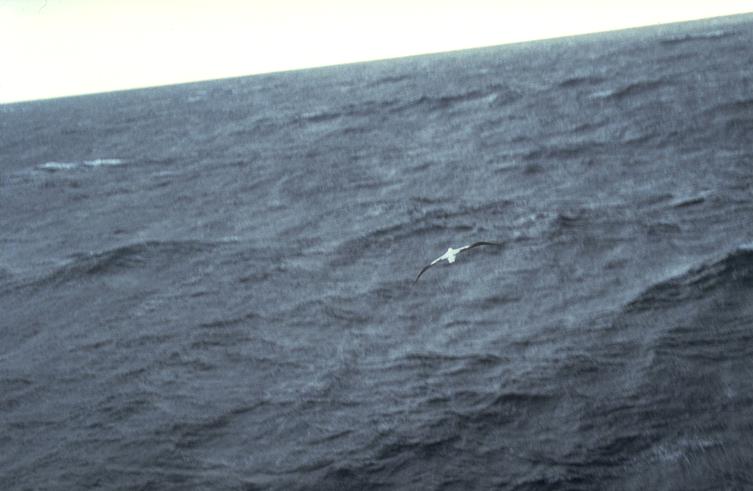
Wandering Albatross
On day two we had some dolphins swim
alongside the ship for a while. The sea was an incredible blue, and the air
very fresh.
The next day, we arrived within sight of land. Our first stop was the South
Shetland Islands, just to the north west of the Antarctic Peninsula. We had
arrived at Deception Island. We had gone here, we later found out, as the
weather was worsening behind us, and Deception Island has a natural harbour
where a landing might be possible.
 Deception Island Entrance |
 At Anchor, Deception Island |
It is a volcano that rises out of the sea, and part of the wall has collapsed, allowing the sea to flood the interior, forming the natural harbour. It was here in 1820 that a young nineteen year old American whaling captain, Nathaniel Palmer, had stood at a place known as Neptune's Window, and been the first person to have spied the Continent itself. Actually, this claim is disputed by both the British and the Russians. The Russian captain was probably first, as his log shows he saw 'an ice field' weeks before the other claims, and the ice field lay where the continent should be---he just mistook it for ice. Anyway, we stood at Neptune's Window for ourselves, but could not see the continent as the weather was misty. In fact, as we entered the island's interior, the weather closed right in, and we had a white-out. If it had been any later, we would not have been able to anchor.
The landing ashore was quite wet, as the wind was blowing, making the water
choppy, even within the natural harbour. The landing craft were little Zodiacs;
inflated rubber craft, with rigid hull and an outboard motor, if you can
picture it. Amanda was facing the wind as we crossed from ship to shore, and
was continually doused with water in the face (I laughed I'm afraid).

Zodiacs and Neptune's Window
Fortunately, we had packed all the gear recommended by the expedition leaders,
and so were sufficiently protected. But the wind was raw, and any exposed skin
got numb very quickly. Ironically enough, this was as cold as it was to get
for the entire journey. The air temperature may have got a few degrees colder,
but we never had winds as high as at Deception again. The island, being
volcanic, is more Moon like than anything. Not much grows, just the odd lichen
here and there. There were remains of an old whaling station which had been
abandoned long before, and destroyed when the volcano erupted in 1971; some
British researchers had to be rescued when they had finally convinced someone
that Deception was indeed erupting. Where we had landed, the water was warm,
and steam was rising from the surface. A few penguins were strolling along the
beach. We saw no nesting birds at Deception, that was to come later. We
boarded ship again, and headed further along the other South Shetland Islands.

Livingston Island
Most of the islands rise about 500 metres, and they are covered with snow and
glaciers. The sun was shining, and the white of the snow was a magnificent
contrast to the sky blue and the deep blue of the ocean. We landed at another
island, called Half Moon island because of its shape.

Half Moon Island
This sits between two of
the largest, and most magnificent of the South Shetlands, Livingston and
Greenwich Islands. The island on which we had landed boasted a large Chinstrap
penguin rookery, which we were to visit. Actually, we had a little climb to
get to the rookery as the birds will nest as high as they can as the snow
melts there first, come spring. Now, these penguins are not really built for
climbing, and it is hard not to laugh at the small birds struggling to climb
up to their nests---many fall over; indeed we were asked not to walk where
there were obvious trails, as the penguins would fall into the footprints we
would leave in the snow. There were many pairs of Chinstraps nesting---
hundreds, maybe a couple of thousand---and the noise (and the smell) is
incredible. The animals have no real fear of anything much whilst on land,
including people, though they will peck at anything that gets near their nest.
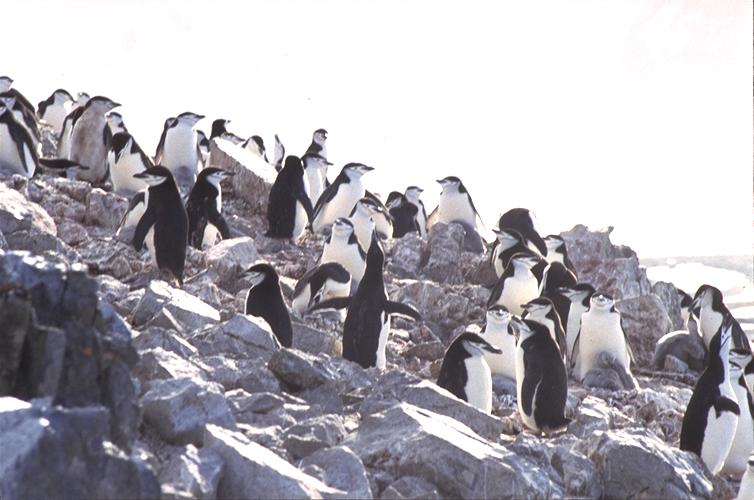 Chinstrap Penguins at Half Moon Island |
 Chinstrap Penguins With Young |
However, we had strict guidelines about approaching animals, with a 15ft
exclusion zone to any animal; unless, of course, the animal wanted to wander
over and investigate the person themselves, which they often do. We saw many
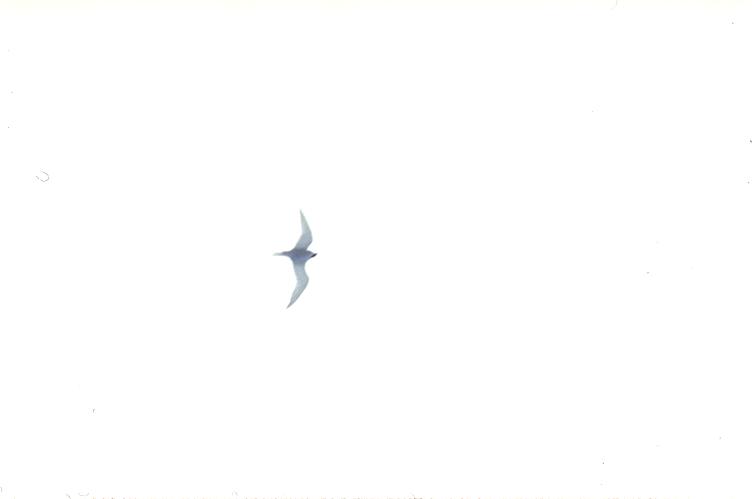
chicks at all different stages of development. Other birds were there,
including some Turns. These were either Arctic Turns, who had flown from the
other side of the planet, or Antarctic Turns, who survive the icy winter of
the Antarctic---they look very similar to the untrained eye. Either way, they
are amazing birds, and very pretty in flight.
Turn
Whilst at the penguin rookery we saw a glacier 'carve'. A great piece of ice slowly seemed to break away and descend into the water. The noise is much deeper than I expected; more like distant thunder than a watery splash. The ice was very deep blue in places. Snow and ice is very rarely just white, especially when the sun shines. The ice 'prisms' the sun light and can produce many different colours, though blue and green is what we saw most.
The next day we were headed toward the continent proper, and sailed down the
Gerlache Strait, laden with Icebergs, and walled on either side by mountains
and glaciers.

The Gerlache Strait
We saw some humpback whales as we picked our way further south,
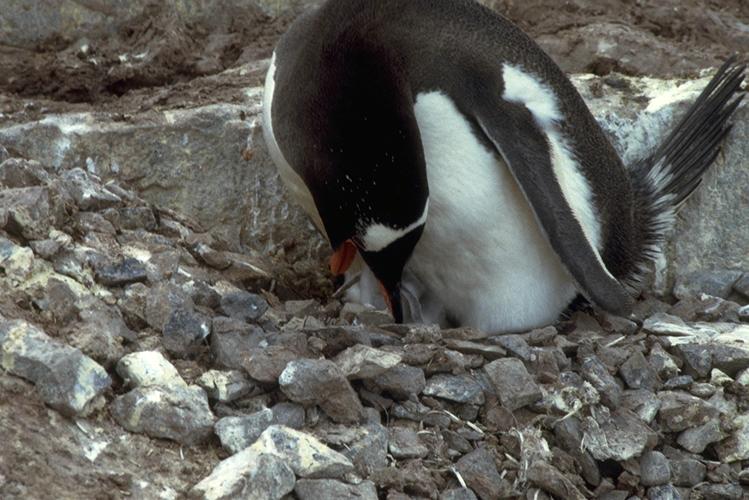
and eventually anchored at a place called Neko Harbour, in Anford Bay. Here a
Gentoo penguin rookery was housed. These birds are larger than the Chinstraps,
and have a fetching white patch above the eye, which is all speckled at the
edge.
 Gentoo Penguin and Chick |
 Gentoo Young |
The harbour was full of ice, making it difficult to get the Zodiacs in,
but it made the place look magical. On the ice, here and there, were some
(misnamed) Crabeater seals. These seals are the most numerous mammal in
Antarctica. They aren't the most appealing animals, having a drab light brown
hide, but they added some variety to the place.
 Crabeater Seals |
 Lone Crabeater Seal |
It was here that in 1898 Adrien de Gerlache de Gomery (bit of a mouthful) had landed with the Belgica, and performed the first land excursion on the continent. Among his crew that summer were Roald Amundsen (of South Pole fame) and Dr Frederick Cook (who was to cause much controversy regarding the North Pole).
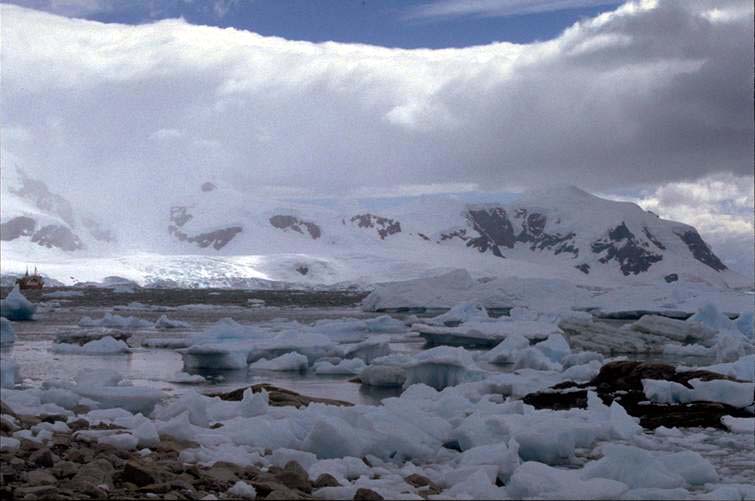
Our second excursion that day was to a Chilean base, "Gonzales Vildas," at
Waterboat point in Paradise bay.
 Paradise Bay #1 |
 Paradise Bay #2 |
Here, in 1921, John Cope had lead an expedition to over-winter on the continent with limited supplies (why, I don't know). They survived, living in upturned whaling boats, eating penguin and seal meat. It's a wonder they didn't get scurvy. John Cope had been Sir Ernest Shackleton's surgeon on the Ross sea party in his trans-antarctic expedition of 1914-1917. Actually some of the Ross Sea party had lost their lives laying stores for Shackleton to supply him from the Pole to the Ross sea; he was to have approached the pole from the Weddell sea. Little did they know that Shackleton's party had never landed. The Endurance had been crushed by the ice, and party was stranded on the ice. Incredibly, Shackleton had got his crew to Elephant island, one of the South Shetland islands, once the pack ice had broken up the following summer. He then, with 5 crew, sailed the 800 miles to South Georgia in one of the open launch boats, and then crossed the mountains of the interior (the first to do so) with two other to get help from a Norwegian Whaling station. Eventually all members were rescued from Elephant island. At Waterboat point we saw many more Gentoo penguins, but Amanda spotted a rogue Adelie penguin amongst the nesting Gentoos. These birds are curious to look at. Their eyes are ringed with a perfect circle of white, which gives them a strange stare; the 'glad eye' as Herbert Ponting, of Scott's last expedition, described it. This was our 'farthest south,' being latitude 64 53 South. The Antarctic circle lies at around 66.6 degrees, and so was some 100 miles further south of this, but I doubt it would have looked much different from were we were.
That evening we headed for our last two destinations. The moon was out, low on
the horizon, and the sun was setting very slowly in these latitudes, and blues
and golds were mixed with pinks from the light cast by the moon. We stayed up
until around midnight. The sun was to set briefly, but it never got truly dark.
At least, that is what we were told by some who stayed up to watch it both set
and rise, even though we were to get up the following morning at 6 a.m. for an
early landing.
 Midnight in the Bransfield Strait #1 |
 Midnight in the Bransfield Strait #2 |
First stop the next day was another historical site, Port Lockroy, the first
British base established on the continent---the beginnings of the British
Antarctic Survey, though it was known by another name then. The base has been
restored, with summer residents from the survey working on it and greeting
visitors like us and educating them about the base and the continent.

Port Lockroy
As well
as penguins, which nested right up to the base, there was a colony of Imperial
Comorants. These look similar to many Shags, but have very deep blue eyes. The
also had some comically ugly chicks.

Imperial Comerants
Some had been lucky enough to have had a
Leopard Seal play tag with their Zodiac. These are the largest of the seals,
with large heads and jaws, for preying on penguins. Actually, I'd heard that
they are quite dangerous animals, and one of the naturalists at dinner was
telling tales of Leopard seals biting chunks out of Zodiacs. Still,
unfortunately we did not see him. On Goudier Island, just adjacent to Port
Lockroy, were the bones of many whales; testimony to the main industry in
Antarctica before regulation.

Whale Bone at Goudier Island
Someone in the past, presumably a biologist, had put a whole skeleton together on the beach from the bones that were lying around. The expedition leaders pointed out that it couldn't be the bones from a single animal as it had two left jaw bones. It must have been incredibly frustrating for the one who did the 'whale jigsaw puzzle' to have failed to find a right jaw bone. The bones did give a good impression of the size of these animals. Some of the vertebrae disks were as big as drums.
Our final port of call was at an Argentinean base, ironically enough leased
from the British. This was at Danco island, which sits surrounded by large
mountains of the continent. The area was heavy with icebergs, and it had got
misty and started to snow, obscuring the mountain peaks, giving the place a
mystical air. Before we were landed ashore we were given a cruise amongst the
bergs in the Zodiac. The icebergs were varied and of some lovely blue hues. I
must admit though, it was getting very cold sitting still in the launch, with
icy water all around. I was glad to land ashore, though I got some good
photographs of the bergs.
 Iceberg at Danco Island #1 |
 Iceberg at Danco Island #2 |
 Iceberg Hunting, Danco Island |
On shore we came across our final species, as there
were two Weddell seals on the beach. We walked right by one initially, as
their mottled coat looks much like the pebbles on which it was lying. They are
much more attractive to look at than their Crabeater cousins, but they were
just lying around like all the seal we saw. I guess its a harder life in
winter. Weddell seals keep breathing holes open in the ice during winter by
frequently gnawing the new ice formation with their teeth, Eventually their
teeth wear out and they starve. So I guess lying around all summer is
forgivable. With that we were heading north again.

Weddell Seal
The journey north across the Drake Passage was not as bad as south, and the
crew did say that the southern journey had been particularly rocky, if not
rough, as the wind had come from one quarter making the boat rock both forward
and back, and from side to side together. On the way back, it was either side
to side, or back and forth, not often both together. Not to say that it wasn't
rough. I was thrown from my chair once. When it got rough, they would damp
down the tablecloths to stop the plates from sliding. I have to say that the
meals and service was excellent (though some people found things to
moan about). The expedition leader was describing to us, one dinner time, what
conditions were like in the galley. The two Chefs were bracing themselves with
feet on one wall, and their heads on the other wall to free their hands to cut
up the food. But we always got a hot meal at dinner time, and two other meals
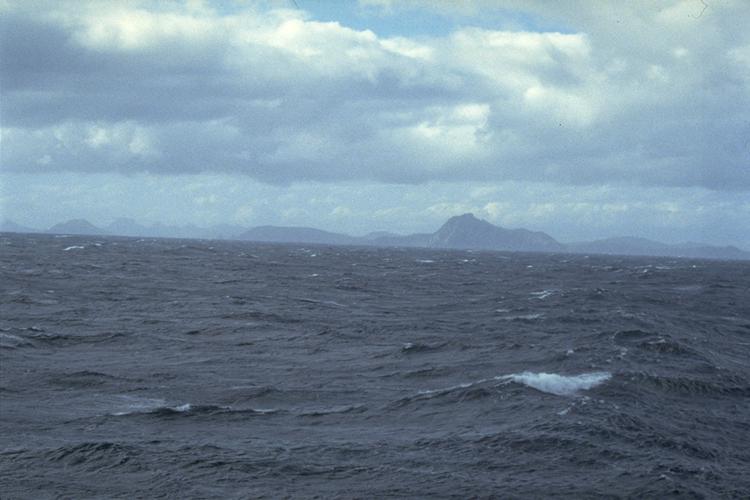
during the day. As a last 'event', the ship rounded cape horn before heading
for harbour in Ushuaia.
 Rounding Cape Horn |
 Return to Ushuaia |
Once back at Ushuaia, we did the journey home in reverse. We flew to Buenos Aires and stayed overnight. There was a fair well dinner that night in a traditional Argentinean steak house. It was very good, though I can only describe the restaurant as a vegetarian nightmare. As well as a stuffed bull at the entrance, there were whole sides of beef on a spit over coals. We flew to Miami the following day, and had an eleven hour stop over. Amanda and I, though, managed to book a room for the day at the airport's resident hotel, and so could shower and sleep. The flight back to the UK was uneventful.
Since we got back, Amanda has shown the slides we took to some 25 or so people
at her work. We also had a dozen or so of my friends over to see them not too
long after I changed jobs. The only thing, I think, that we regret is not
booking to go to South Georgia as well as the peninsula. One of the crew was
showing us her photographs of the King Penguin colonies there, which looked a
magnificent sight. Still, I guess we can have an ambition to go back, and take
in South Georgia as well. The oldest member of the passengers was 85---he was
a likeable American, who was a true gentleman. So I guess we have
plenty of years in which to go.

Simon Southwell