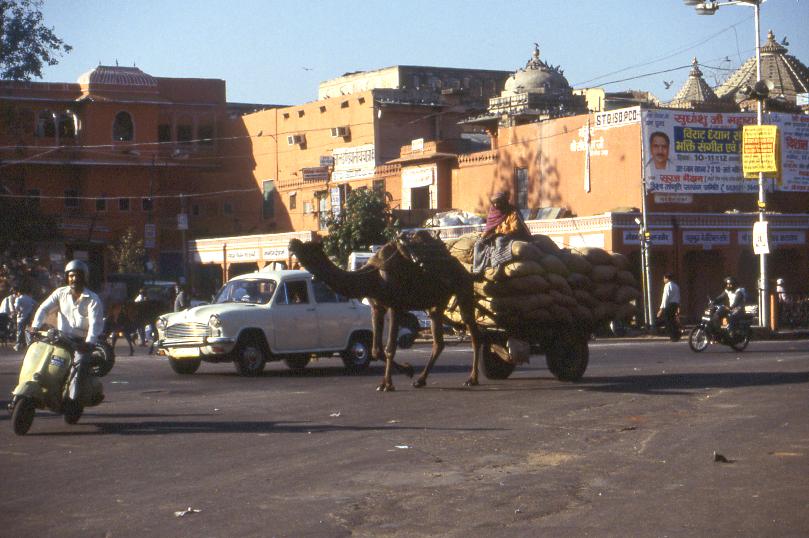
 Jaipur Street |
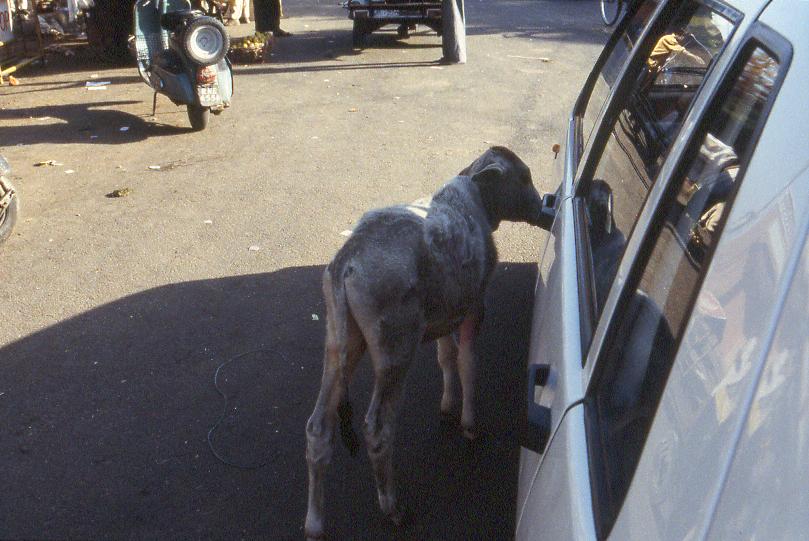 Calf investigating our car |
Cows are seen everywhere in India. They are sacred to the Hindus and are given completely free reign. They will wander the streets all day, returning at dusk to be fed by their owners. They are oblivious to traffic.
Jaipur Street |
Calf investigating our car |
Our fist place to visit was Jantar Mantar. Jantar Mantar means instrument of Calculation. The observatory was begun in 1728 by Jai Singh, and contains instruments for calculating Horoscopes as well as the position of the Sun, Moon and the Earth.
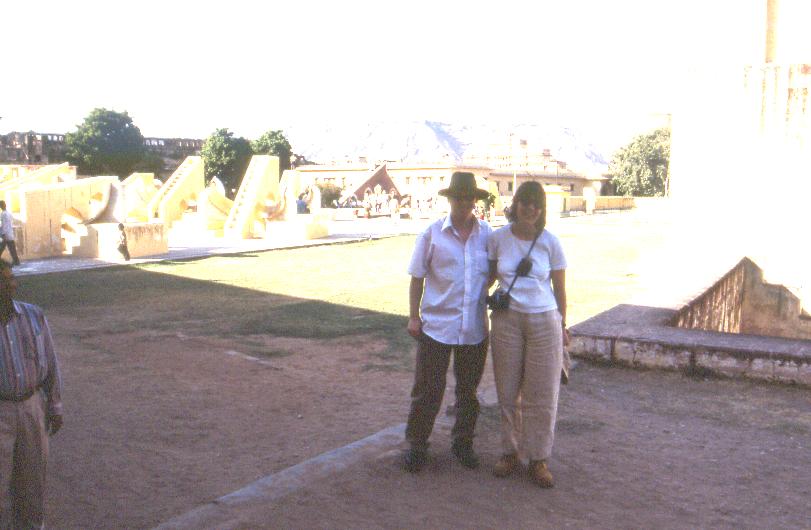 Jantra Mantra |
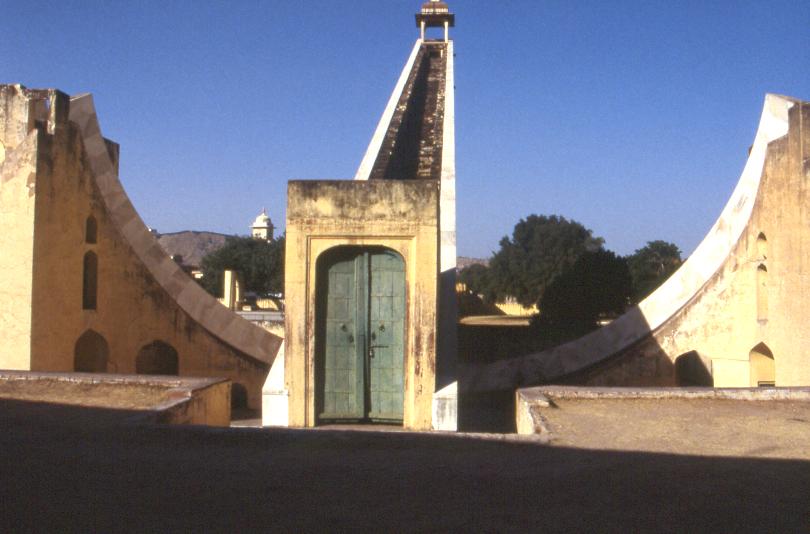 Brihat Samrat Yantra Sundial |
One of the most impressive intruments was the Brihat Samrat Yantra Sundial. This huge sundial, with a simple calculation adjustment for the time of year can tell the time to within 20 seconds. Next we vist Mubarak Mahal, City Palace . The city palace is still home to the sitting Maharaja. The Mubarak Mahal (Welcome Palace) was built a little over 100 years ago as a guest house for visitors. Guests have included Queen Elizabeth II.
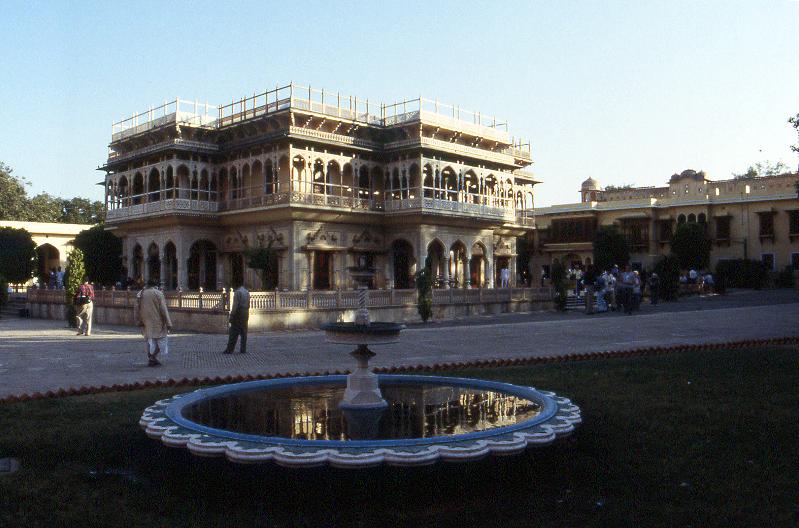 Mubarak Mahal |
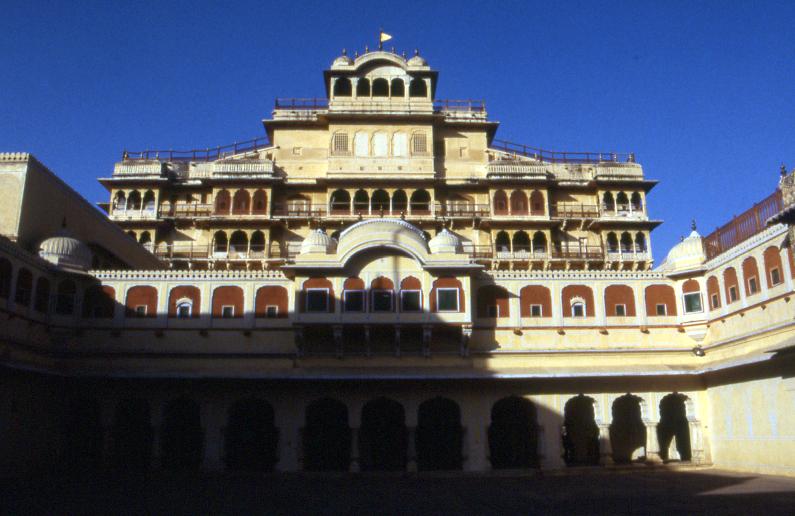 Chandra Mahal |
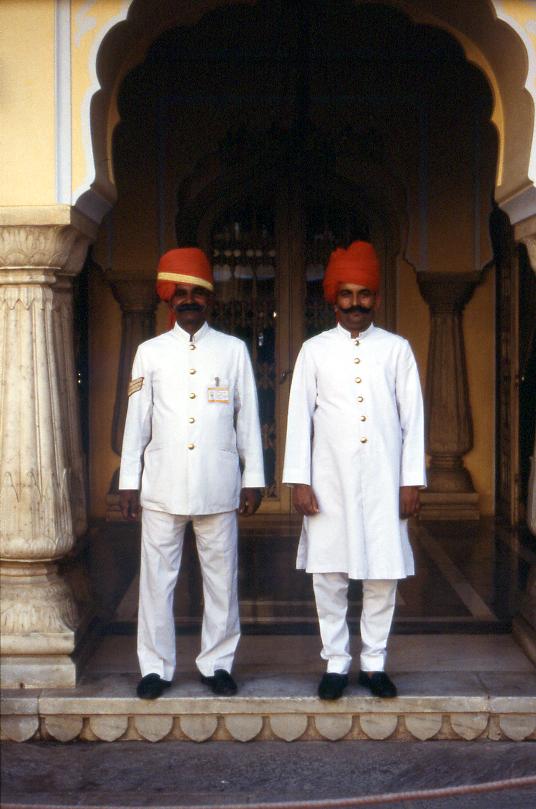 City Palace Guards |
Within the palace is the Chandra Mahal. The Chandra Mahal is still the private residence of the Maharaja and his family. The palace still has guards---some of whom look like they were there when it was originally built.
The palace houses many craftsmen of the city, under the sponsership of the maharaja. We met one award winning artist, who showed us the techniques used, and who painted the images of the Shah Jahan and Mumtaz Mahal seen on the Agra pages.
Also along the main street of Jaipur is the Hawa Mahal, Palace of the Winds.
Built in 1799 it is a facade. It was built to allow the ladies of the royal household
to view the main street of the old city, without themselves being seen. There are 953 windows in all.
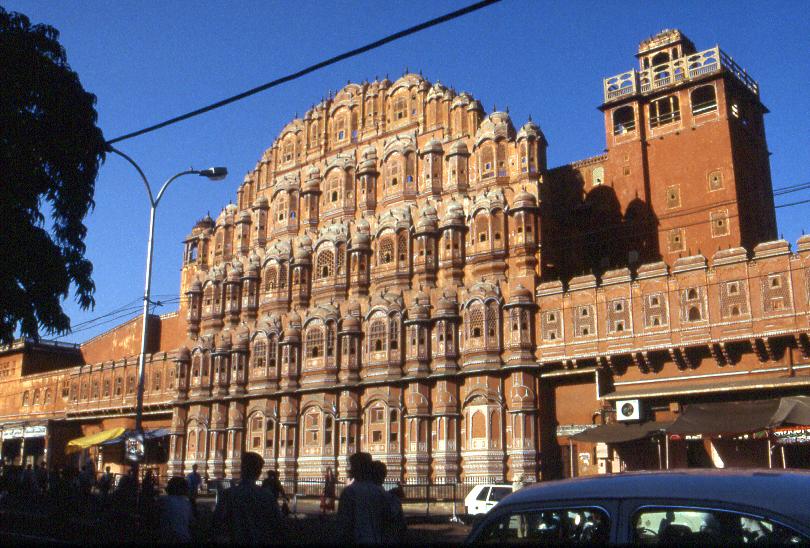
Hawa Mahal
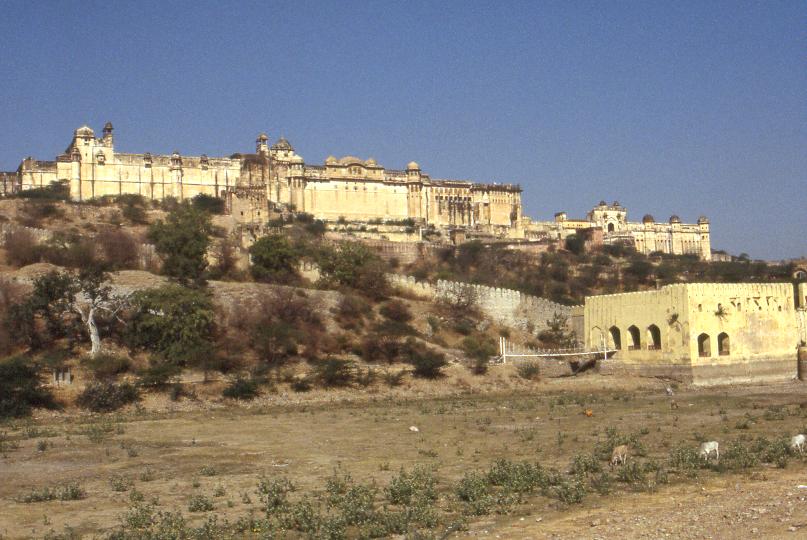 Amber Fort |
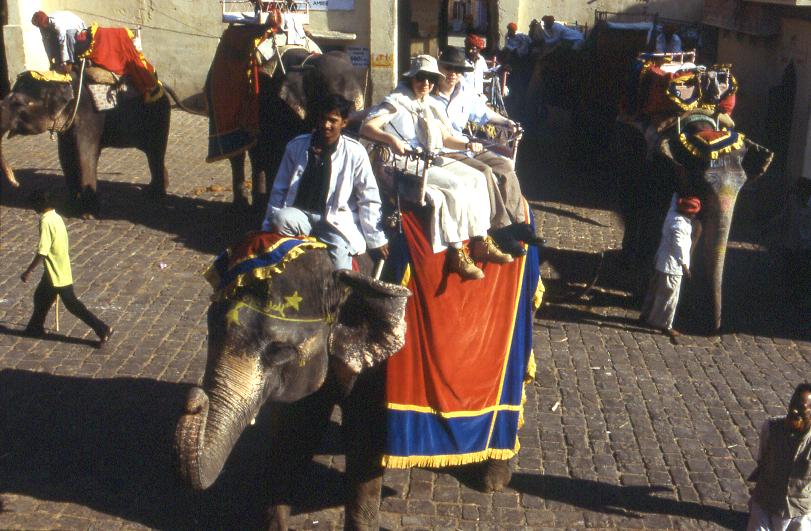 Us on an Elephant |
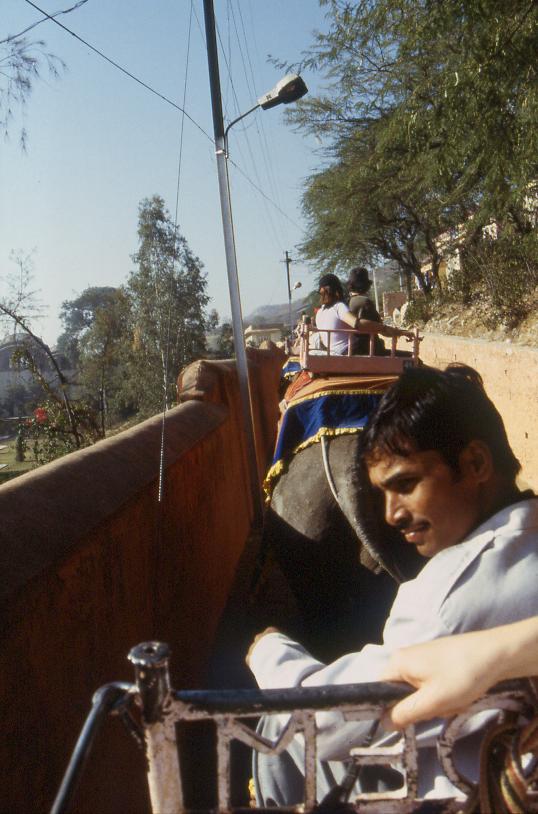 The ride to the top |
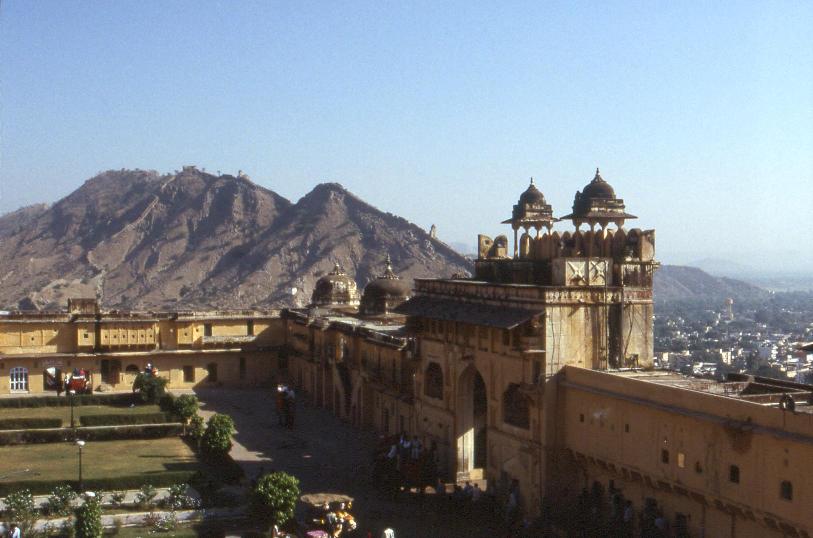 Main gate and distant fortifications |
The elephants arrive through the main gate. From here one can see Jaipur, and also in the distance can be seen the walled fortifications which run for 35 km
There are many splendid things to see at the fort, with ornate walkways, and beautifully decorated rooms. The entrance to the Maharaja's apartments is a magnificant doorway, elaborately decorated. Ganesh is painted over the door, as is traditional in a Hindu building. Ganesh is the god of good fortune, and the image over the door is supposed to bring good luck to the house and those who reside there.
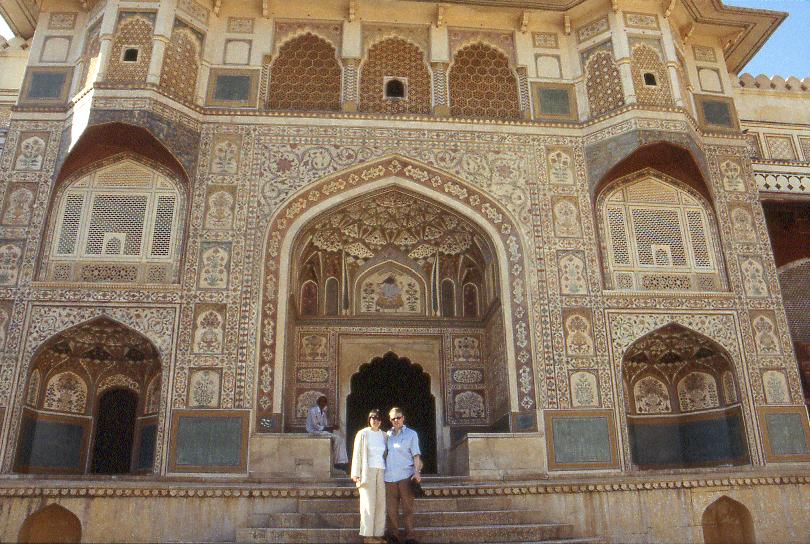 Gateway to Maharaja's Apartments |
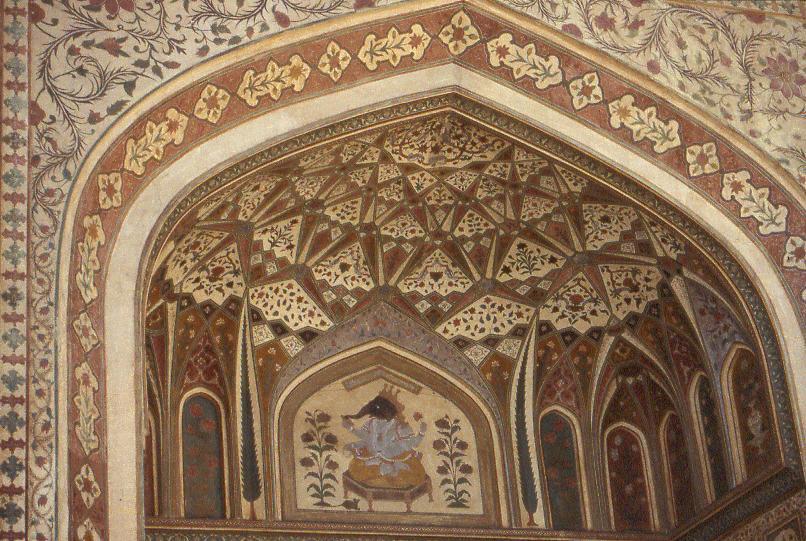 Ganesh over the doorway |
The Jai Mandir (Hall of victory) has hundreds of convex mirrors set in the ceiling. In an adjacent, darkened room, we saw the affect of this when one or two candles are lit. The ceiling glints like a thousand stars.
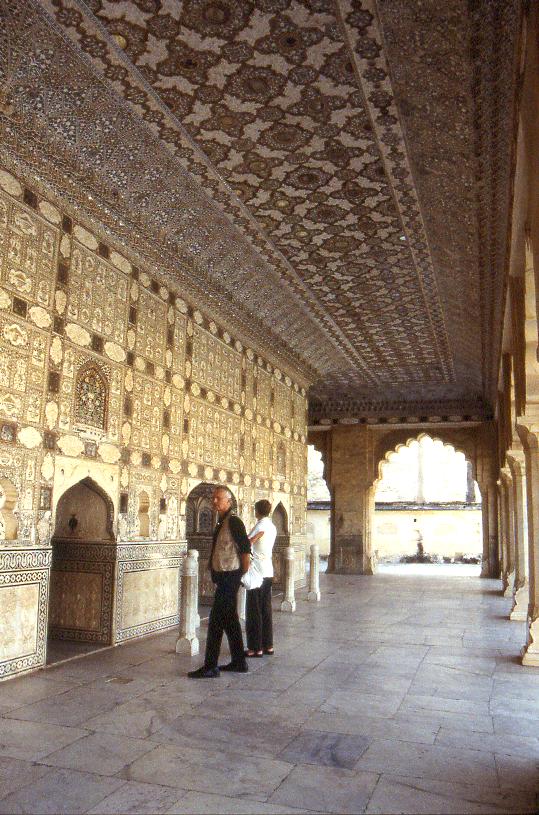 Open Walkway |
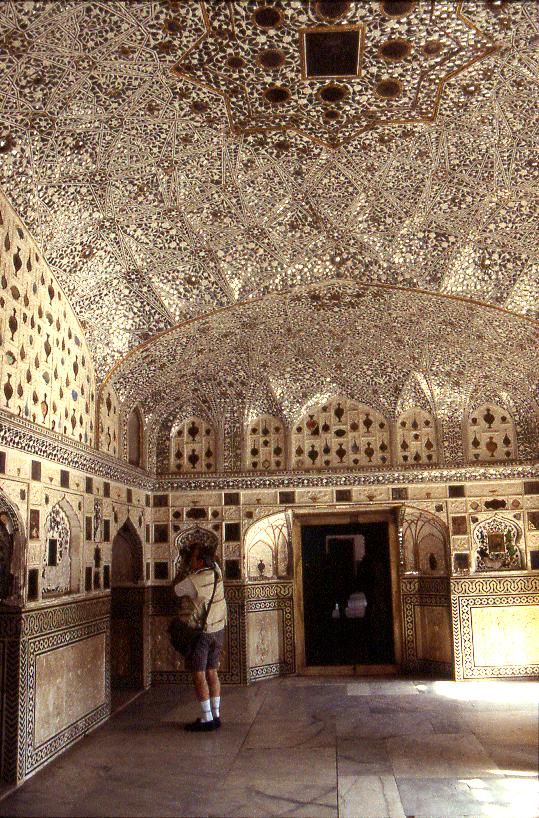 Jai Mandir |
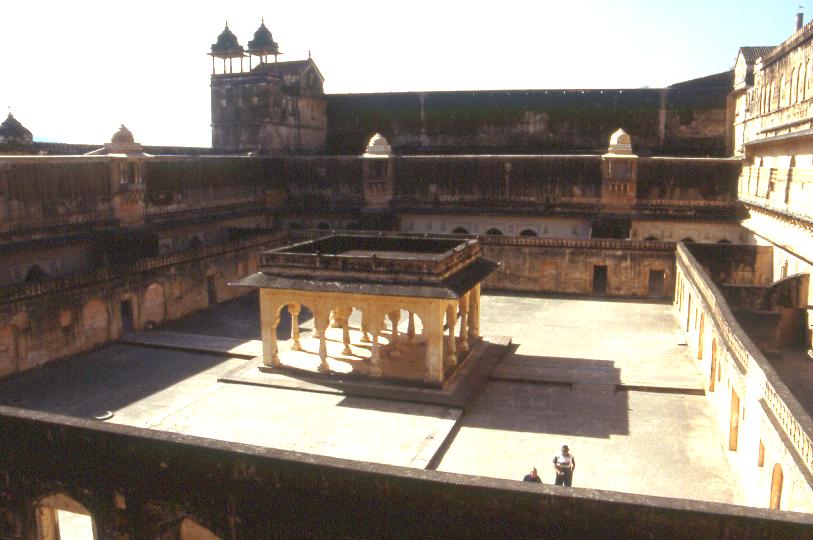 Zenana |
21st January 2001