India Trip November 2000 : Delhi
Our flight to India went pretty smoothly with no real delays
or problems (except that Simon drank too much and passed out :-).
We met a great guy from Birmingham who was visiting his grandmother
in the Punjab, and who had spent much of his life growing up in
Kenya. Wish we could remember his name
 We arrived in Delhi at 1 in the morning (local time) and got out
of customs around 2:30. Fortunately we were being met to be taken to our
hotel. As soon as you come out of the arrivals hall, even at 2:30am
there are hundreds of people. We found our drive, and set off for
New Delhi where our hotel was---The hotel Broadway.
The next day, after being woken at some early hour by calls to prayer
at the local mosque, we had a breakfast of eggs and Aloo. Never
had curry for breakfast before, but it was in fact very good. The
first planned activity was a tour of Delhi in the afternoon.
Our guide was someone who said her name was 'sweetie; (and she was,
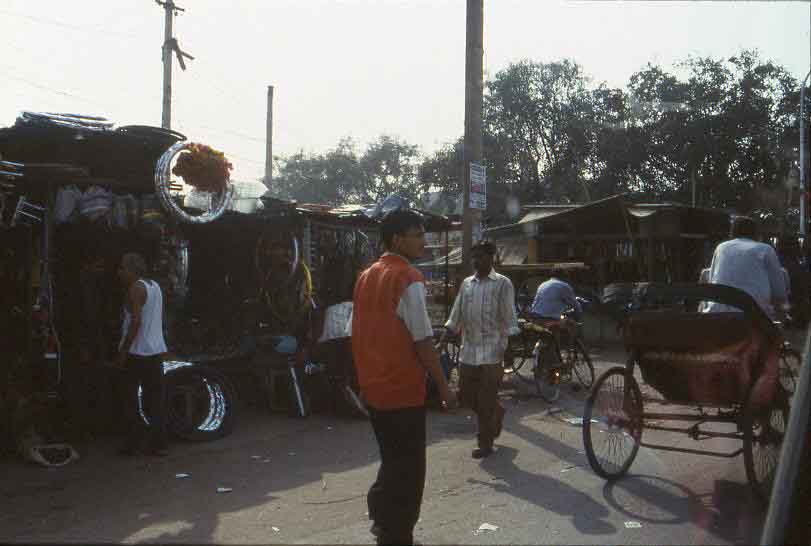
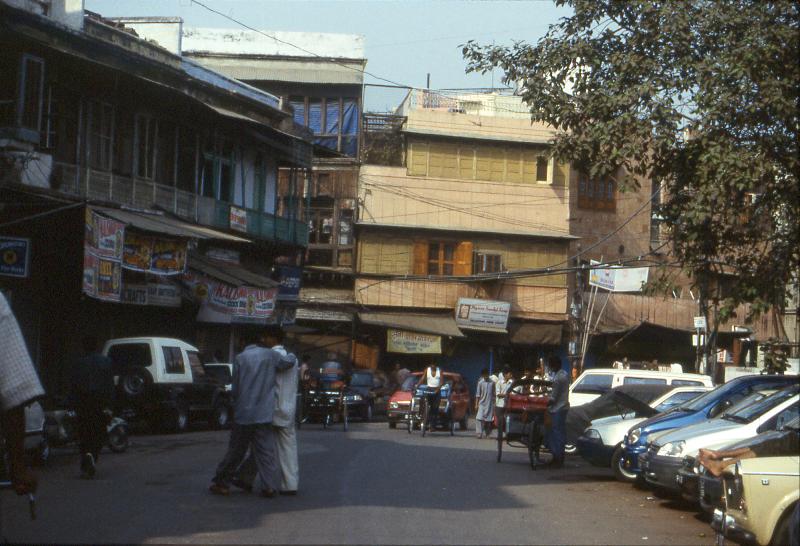
as it turned out. We were driven through the crowded streets of Delhi,
on our way to the first destination.
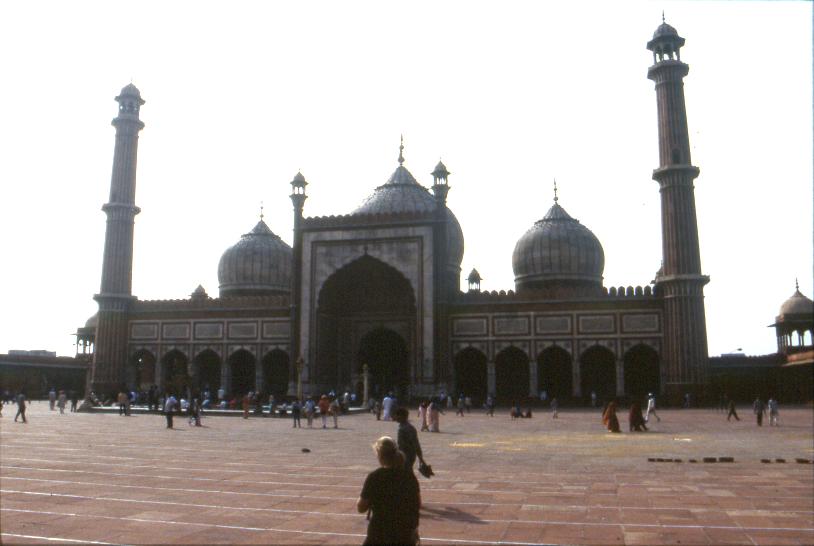
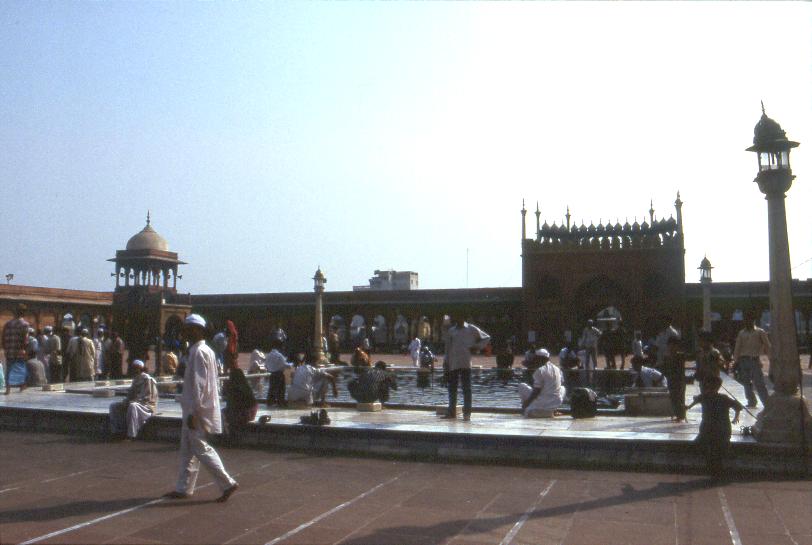
Our first port of call was the Jama Masjid Mosque.
The name means 'Friday Mosque'. Built by the Shah Jahan, it was started in 1644 and
completed in 1658. It is the largest Mosque in India.
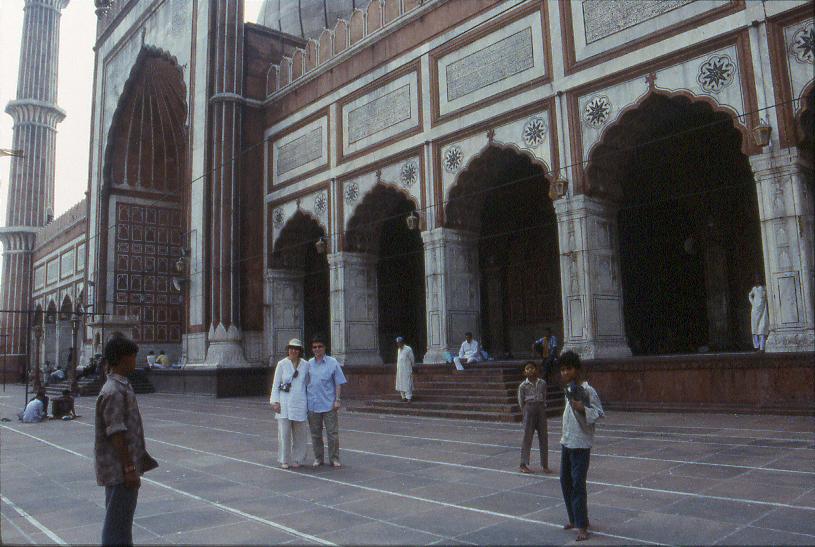
Notice that we have no shoes on. They are left at the gate for a small tip (10R = 13p). Sweetie gave
us a tour, and then we were allowed to wonder around by ourselves. It is difficult not
to be hassled by people wanting money all the time. Even in a mosque. But most people
were going about the business; either washing in the pool or praying.
People at the pool, Jama Masjid Mosque
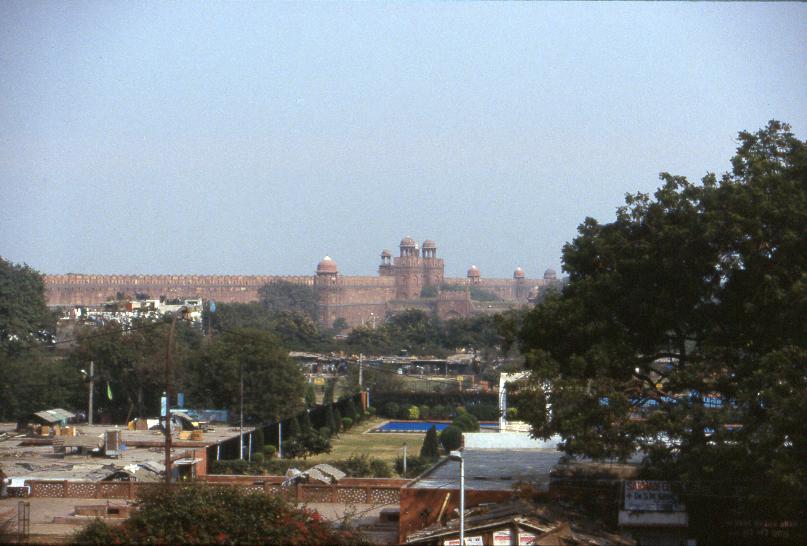
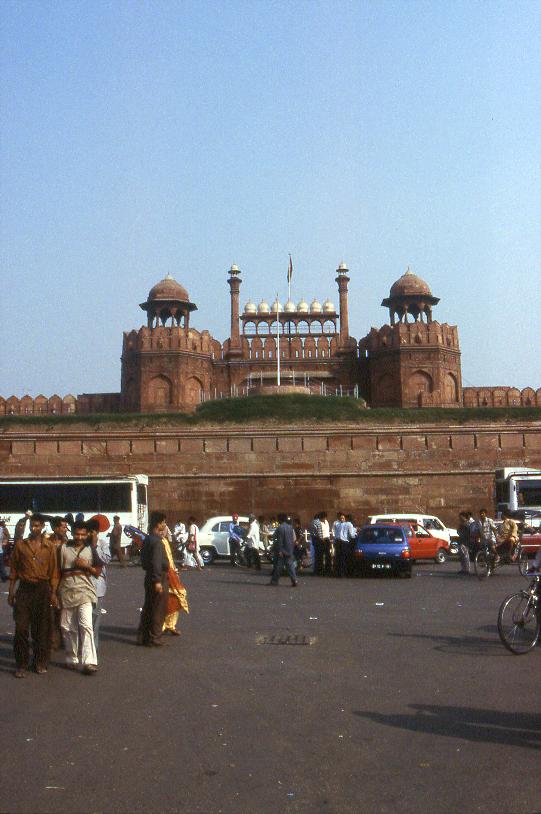
Our next port of call was Lal Qila, the Red Fort.
Built by the Shah Jahan. Started in 1638 and completed in 1648. Shah Jahan never
ruled from here, but his son, Aurangzeb, did after he'd deposed his father and
imprisoned him at Agra.
We did not go into the Red fort, which is similar to the fort at Agra (though larger),
but we stopped outside Lahore Gate, so named since it faces Lahore, now in Pakistan.
Indian independence day is celebrated here every year. Beggers came up to us here;
some were children with cataracts or missing limbs, and some old men with
contorted and disfigured bodies. It takes some getting used to, and
I'm sure we did not see the worst of it.
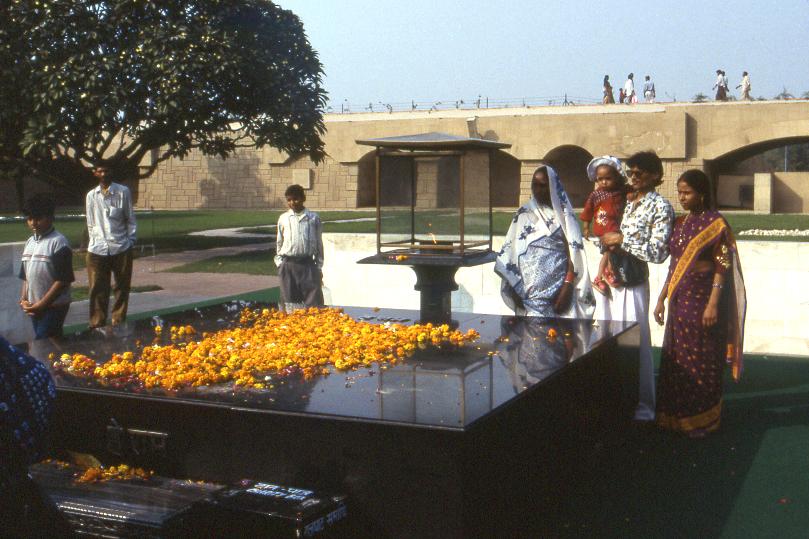
Next stop was Raj Ghat.
The site where Mahatma Gandhi was cremated after his assasination in 1948.
Some of his ashes were thrown into the Ganges, but some are under the marble memorial
shown. A flame burns constantly, and a ceremony is held each friday, the day he died.
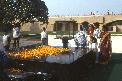
Raj Ghat
The place was a serene garden; a welcome break from the hussle and bussle of
the main Delhi streets. Many people were there to show their respects.
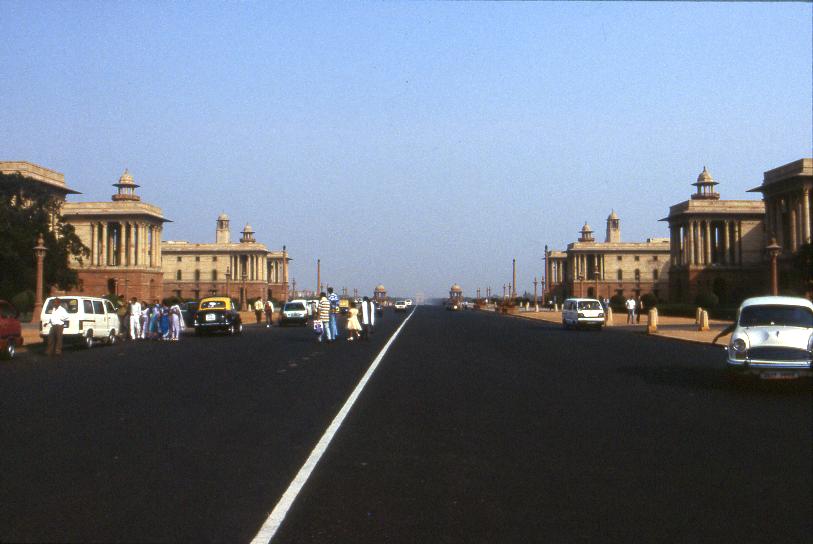
We then drove over to New Delhi, where the British influence is more readily
seen. We stopped of at the government buildings. As it was Sunday there were
very few people around.
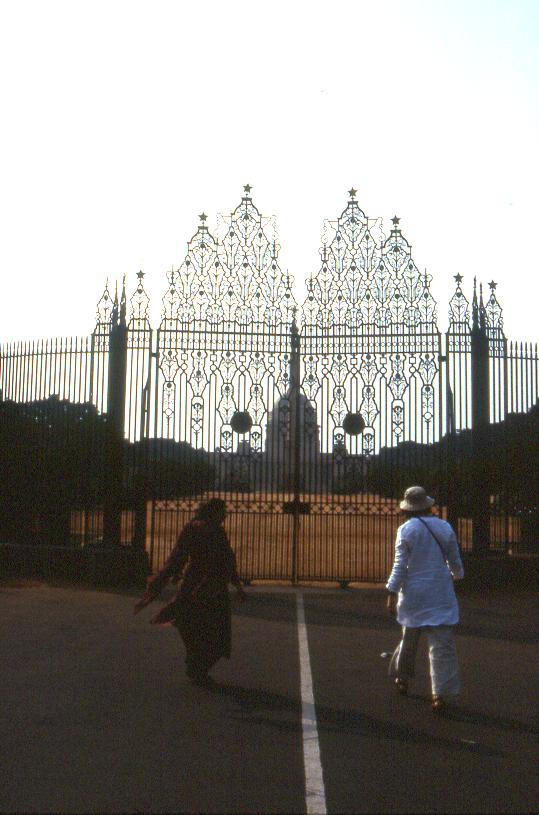
Through wrought iron gates could be seen Rashtrapati Bhavan, the President's Palace.
Originally built by the British in the 1920s, these building now house the Indian
Government. To either side of the road leading to the gates (Rajpath) are the
North and South Secretariat. These building house the Indian government departments
(civil service).
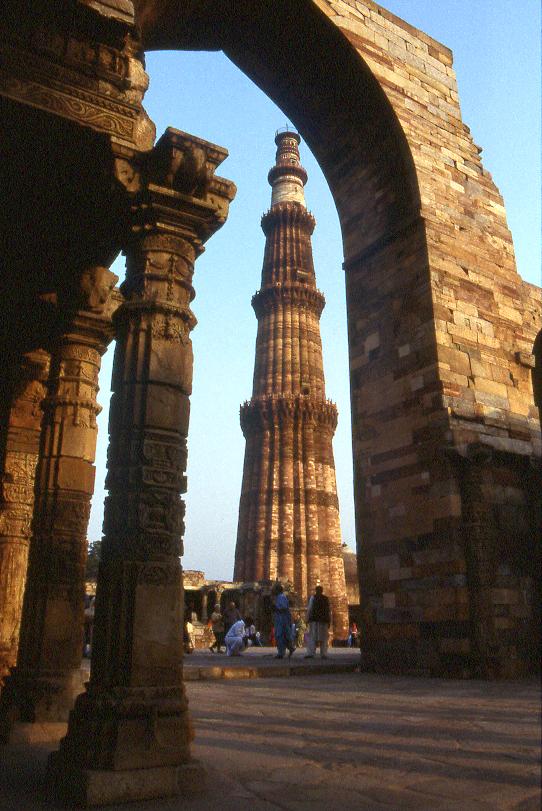
Though in New Delhi, the oldest monument we saw was Qutab Minar.
Qutab Minar is a tower of victory of the first muslim conquests in India.
It was started in 1193 after the defeat of the last Hindu Kingdom in Delhi.
With sunset coming on, the red stone was a magnificent colour. The grounds
also house the ruins of the oldest mosqu in India.
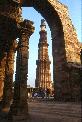
Qutab Minar
[Home]
[India]
[Next: Agra]
21st January 2001
(c) 2000, 2001 Simon and Amanda Southwell. All rights reserved.
simon_southwell@bigfoot.com